02 / COLD INDUSTRY APPLICATION
Work through the cold.
Protect the flow.
Cold rooms add temperature, condensation and operator-exposure questions to the normal load and route brief. Equipment, battery, controls and operating routine should be reviewed as one system.
01 / OPERATING FLOW
Follow the load.
Find the real constraint.
Break the application into four connected stages. The most demanding stage should guide the first shortlist.
Ante-room
Record temperature transitions, door cycles and where condensation can form.
Cold route
Check floor traction, visibility, aisle clearance and exposure time per entry.
Rack placement
Confirm pallet condition, lift height, load centre and capacity at temperature.
Recovery
Define parking, drying, charging and inspection routines outside the cold zone.
02 / APPLICATION CHECKS
Four details
to verify early.
These checks turn a broad industry label into a site-specific equipment brief.
Temperature range
Send normal, minimum and transition temperatures—not only the room set point.
Battery plan
Discuss chemistry, usable duty time, charging location and warm-up or recovery routine.
Cold protection
Confirm seals, lubricants, electrical protection and control suitability for the application.
Operator routine
Plan exposure limits, PPE, visibility and safe entry and exit from temperature zones.
03 / EQUIPMENT DIRECTIONS
Build a shortlist
around the task.
These series are starting points, not automatic recommendations. Confirm the actual model and configuration against your load and route.
S Series
Vertical pallet work where aisle, rack and cold configuration are confirmed.
P Series
Horizontal transfer between ante-room, cold store and dispatch.
E Series
Counterbalance handling for larger loads and loading interfaces.
COLD STORE FORKLIFT / OPERATING SYSTEM
Plan the transitions.
Protect the complete routine.
A cold store forklift or freezer warehouse forklift must be reviewed around temperature, condensation, traction, battery performance, charging location and operator exposure—not only the truck model.
Inspect, prepare the load and identify the route before entry.
Confirm permitted temperature, duration, traction and visibility.
Manage condensation risk when moving between temperature zones.
Use the approved charging location, temperature range and inspection routine.
Temperature
Share minimum, normal and transition temperatures plus time spent in each zone.
Energy
Confirm battery chemistry, expected runtime, charger and permitted charging conditions.
Surface
Review ice, moisture, floor treatment, gradients, doors and wheel or tyre direction.
Protection
Discuss components, connectors, controls, cab needs and maintenance for the actual environment.
04 / PREPARE YOUR ENQUIRY
Six facts.
A faster first answer.
Send measurements, photos or a simple route drawing where useful. ZJ can then discuss a narrower equipment direction and the points that still need confirmation.
Send this application- minimum and normal temperature
- time spent inside per cycle
- pallet and load details
- rack height and aisle width
- floor and condensation conditions
- charging location and shift plan
05 / PRACTICAL ANSWERS
Questions from
this application.
Can a standard electric forklift work in a freezer?
Do not assume so. Temperature, moisture transitions, component protection, battery performance and the operating routine must be confirmed for the selected model and configuration.
How does low temperature affect battery planning?
Available duty time and charging behavior can change in low temperatures. Share the temperature profile, entry duration, shift pattern and charging location for configuration review.
What floor details matter in cold storage?
Record ice risk, condensation, gradients, joints, drainage and surface condition. Tyres and operating speed must suit the assessed route.
What should a cold-store enquiry include?
Include temperatures, pallet and load data, lift height, aisle measurements, time inside, charging routine, required options, destination and quantity.
06 / RELATED INDUSTRIES
View all applications


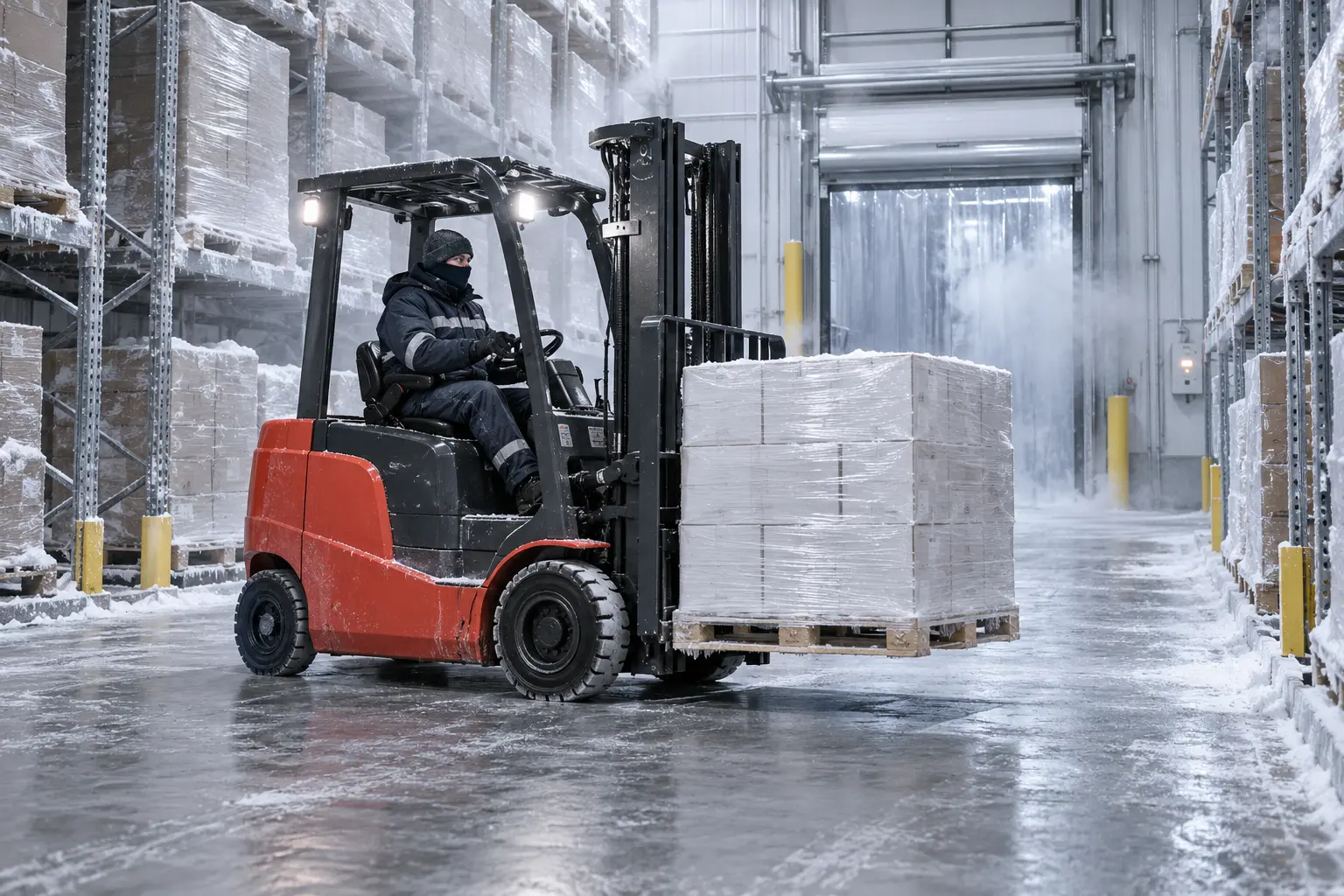
Illustrative ZJ application visual. It does not represent a verified customer site or final supplied configuration.
YOUR NEXT MOVE STARTS HERE
LET’S LIFT
YOUR AMBITION.
Tell us what you move. We’ll start with your requirements.
ZJ