04 / YARD INDUSTRY APPLICATION
Move dense loads.
Read the whole yard.
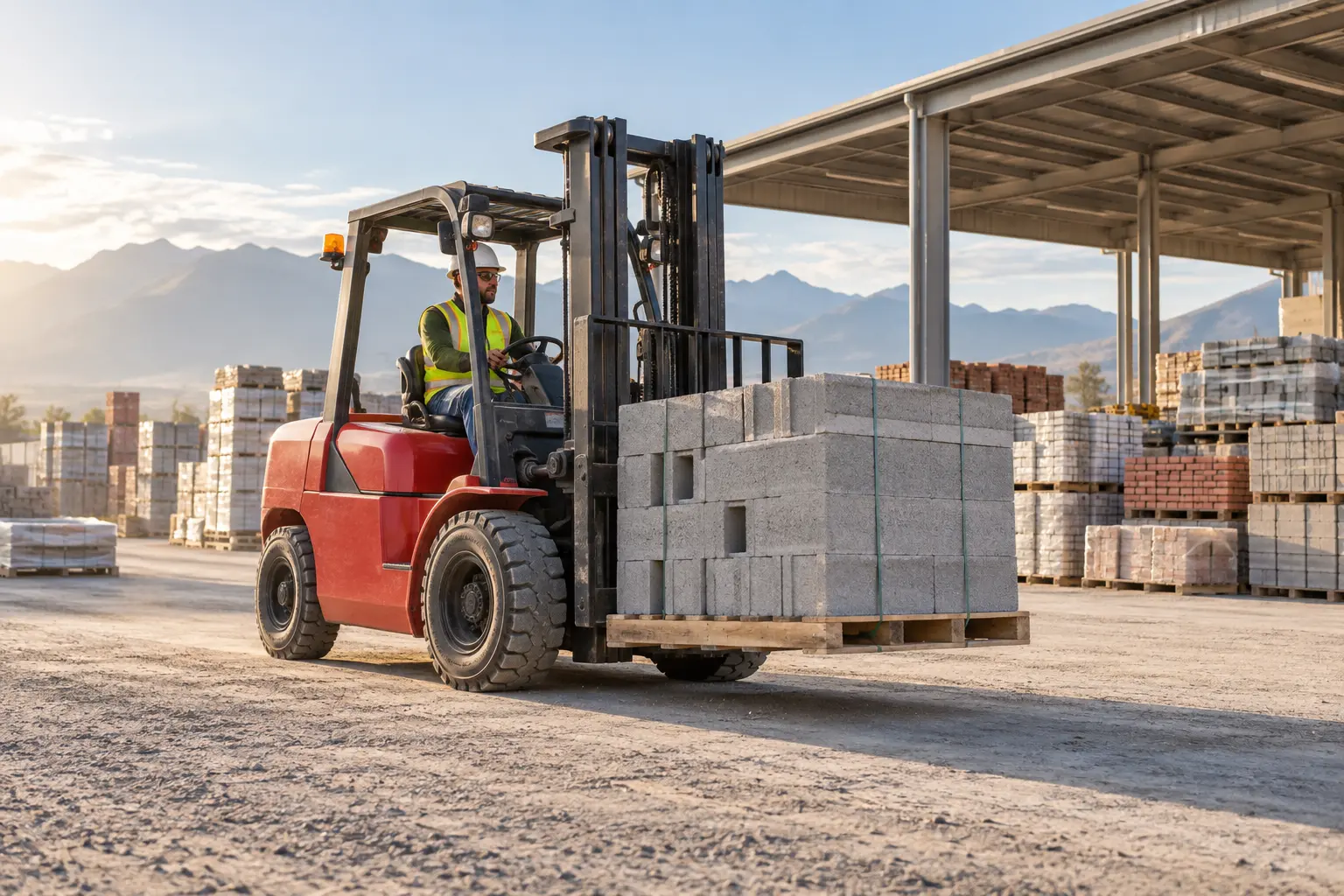
Palletised blocks, pavers, stone and bagged products combine dense loads with outdoor surfaces and changing weather. Capacity must be considered with the load centre, route and attachment.
01 / OPERATING FLOW
Follow the load.
Find the real constraint.
Break the application into four connected stages. The most demanding stage should guide the first shortlist.
Production exit
Confirm pallet quality, product stability and pickup clearance.
Yard transfer
Survey surface strength, loose material, drainage, gradients and turning room.
Stack & stage
Record stack height, visibility, load stability and safe aisle allocation.
Vehicle loading
Check trailer deck height, approach, edge protection and final load placement.
02 / APPLICATION CHECKS
Four details
to verify early.
These checks turn a broad industry label into a site-specific equipment brief.
Dense load
Provide maximum actual weight, dimensions and load centre for every product format.
Surface & tyres
Match the confirmed tyre direction and clearance to dust, debris and yard conditions.
Dust control
Discuss air intake, cooling, cleaning and inspection routines for the environment.
Weather exposure
Record rain, temperature, lighting and seasonal ground-condition changes.
03 / EQUIPMENT DIRECTIONS
Build a shortlist
around the task.
These series are starting points, not automatic recommendations. Confirm the actual model and configuration against your load and route.
D Series
Relevant outdoor counterbalance handling where diesel is appropriate.
RT Series
Uneven outdoor routes requiring assessed clearance and traction.
E Series
Electric counterbalance direction for suitable hard-surface yards and facilities.
04 / PREPARE YOUR ENQUIRY
Six facts.
A faster first answer.
Send measurements, photos or a simple route drawing where useful. ZJ can then discuss a narrower equipment direction and the points that still need confirmation.
Send this application- product and pallet dimensions
- maximum verified load
- yard surface photos
- gradients and turning space
- stack and trailer heights
- weather, hours, destination and quantity
05 / PRACTICAL ANSWERS
Questions from
this application.
Which forklift is suitable for concrete blocks?
Selection depends on the verified pallet weight, load centre, stability, lift height and yard route. The published rated capacity alone is not enough.
When should a rough-terrain forklift be considered?
Consider it when the assessed outdoor route needs greater clearance and traction than an industrial yard truck, while still checking stability, gradients and load requirements.
Do solid or pneumatic tyres work better in a yard?
There is no universal answer. Surface, debris, puncture risk, traction, comfort, clearance and the available model configuration should be reviewed together.
What yard photos should I send?
Photograph pickup and placement areas, the roughest surface, gradients, tight turns, loading points and overhead restrictions, with measurements where possible.
06 / RELATED INDUSTRIES
View all applications
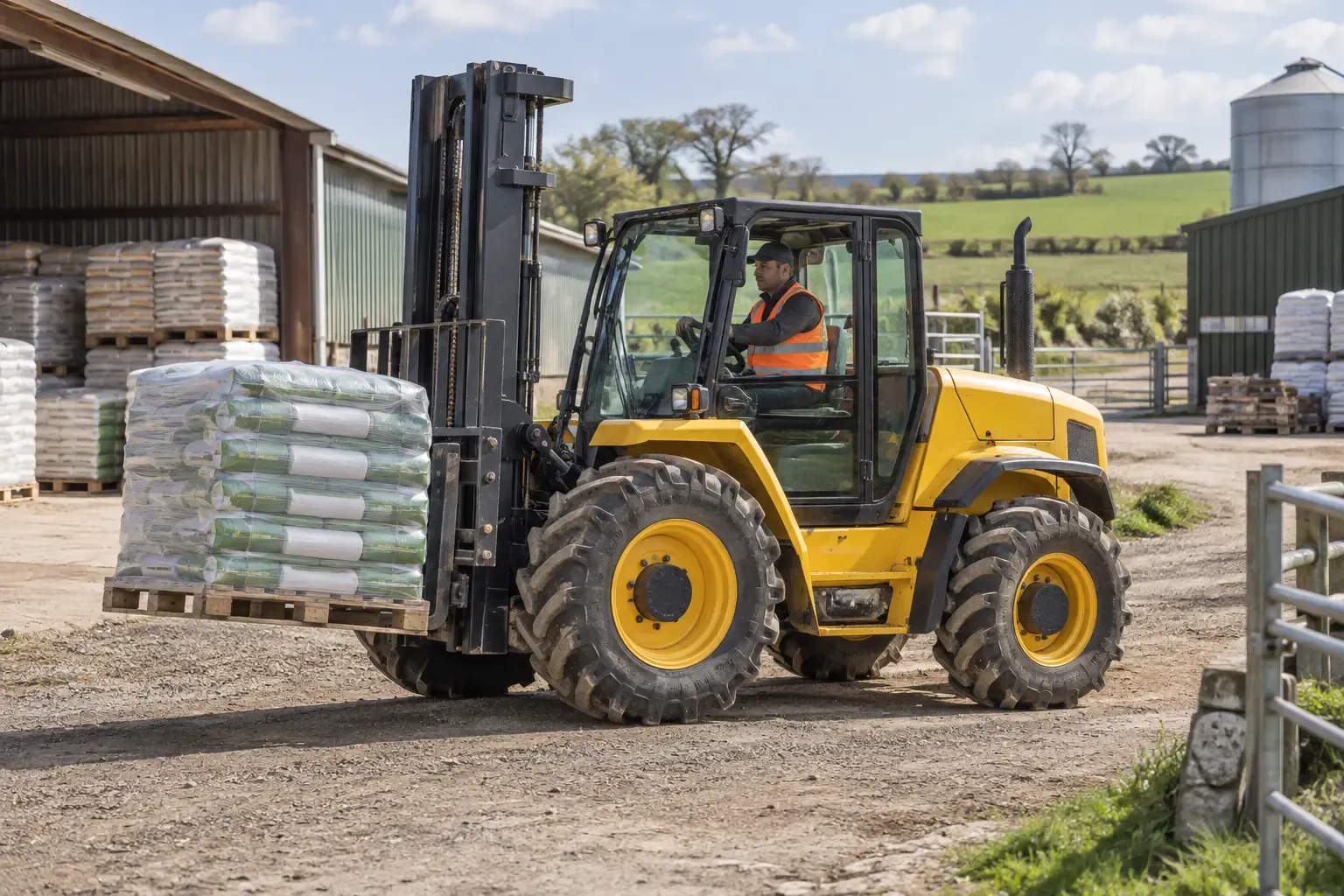
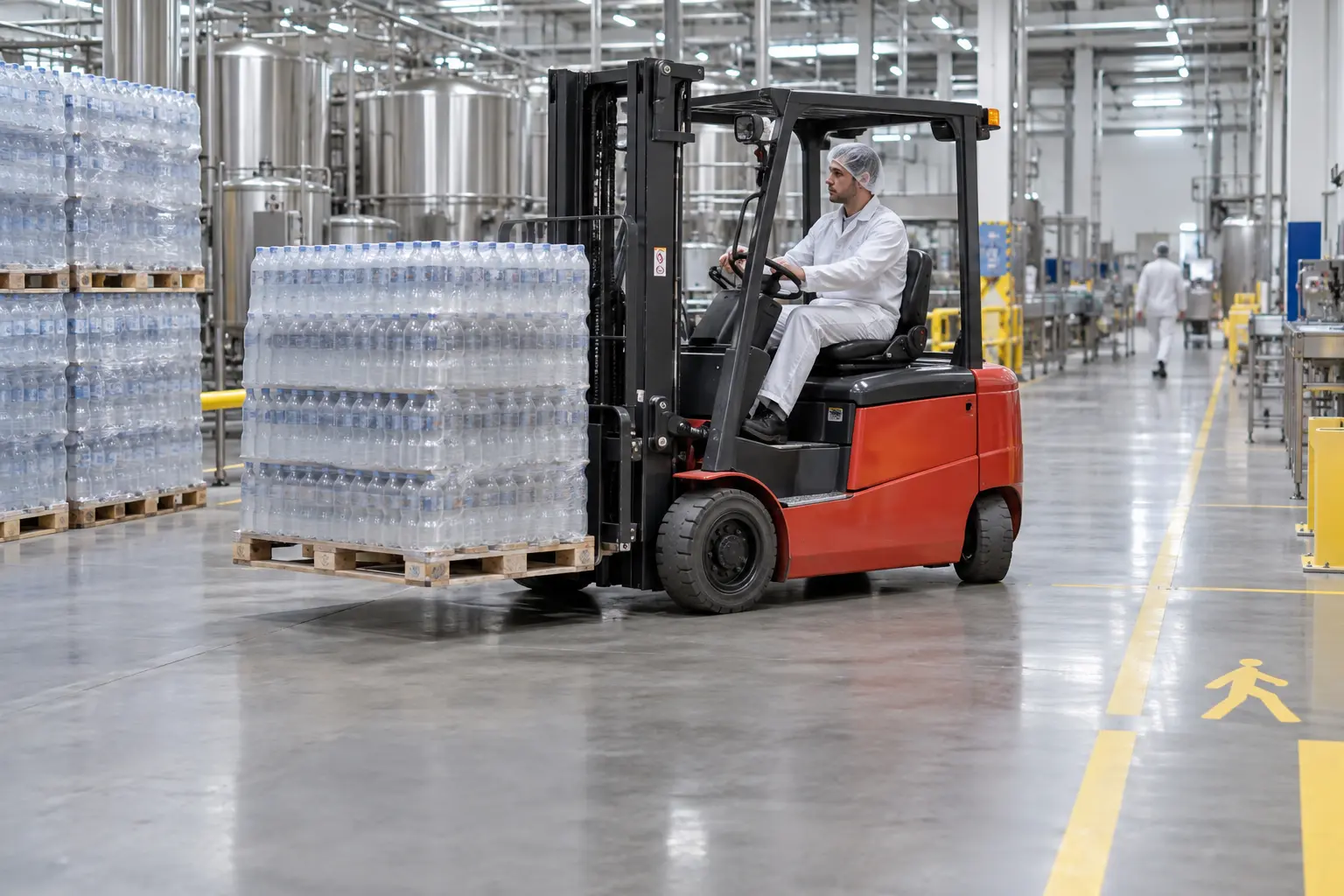
Illustrative ZJ application visual. It does not represent a verified customer site or final supplied configuration.
YOUR NEXT MOVE STARTS HERE
LET’S LIFT
YOUR AMBITION.
Tell us what you move. We’ll start with your requirements.
ZJ