07 / CLEAN INDUSTRY APPLICATION
Keep goods moving.
Keep zones clear.
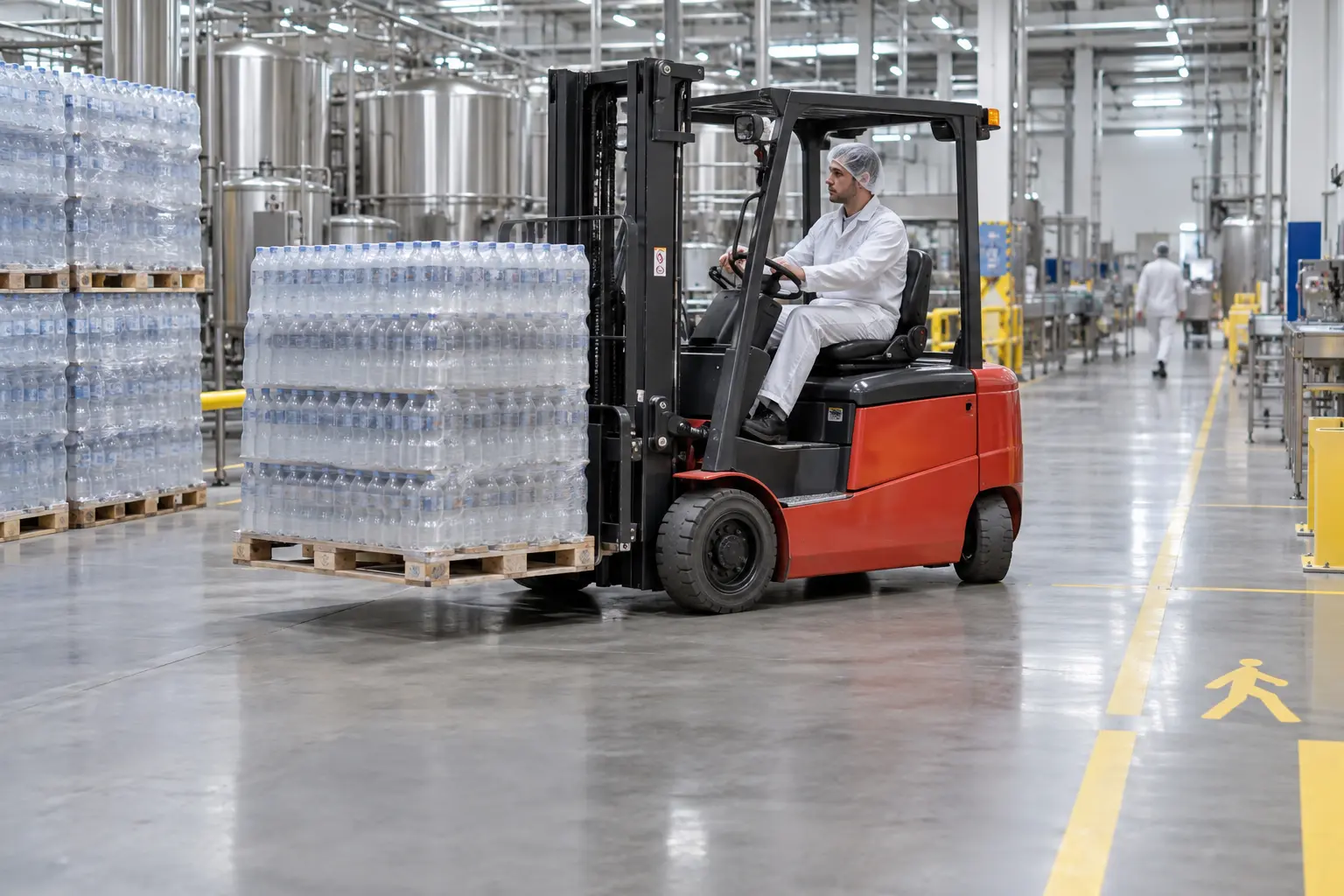
Food and beverage facilities combine high pallet volume with hygiene, traceability and strict traffic separation. Equipment selection should reflect each zone and the transitions between them.
01 / OPERATING FLOW
Follow the load.
Find the real constraint.
Break the application into four connected stages. The most demanding stage should guide the first shortlist.
Goods receipt
Check pallet condition, quarantine flow and unloading peaks.
Clean transfer
Map hygiene zones, floor cleaning, drainage and pedestrian separation.
Storage
Confirm rack height, aisle clearance, cold transitions and pallet integrity.
Dispatch
Plan route volume, staging, dock loading and seasonal demand peaks.
02 / APPLICATION CHECKS
Four details
to verify early.
These checks turn a broad industry label into a site-specific equipment brief.
Hygiene zones
Define cleaning method, restricted areas and any material or protection requirements.
Floor condition
Record wet zones, drainage channels, coatings, thresholds and traction changes.
Load integrity
Share pallet type, packaging stability, maximum weight and product overhang.
Peak volume
Use the busiest receiving or dispatch window to estimate equipment duty.
03 / EQUIPMENT DIRECTIONS
Build a shortlist
around the task.
These series are starting points, not automatic recommendations. Confirm the actual model and configuration against your load and route.
E Series
Counterbalance movement across clean receiving, storage and dispatch routes.
P Series
Repeat pallet transfer between staging, picking and loading.
S Series
Compact vertical pallet placement in suitable controlled areas.
04 / PREPARE YOUR ENQUIRY
Six facts.
A faster first answer.
Send measurements, photos or a simple route drawing where useful. ZJ can then discuss a narrower equipment direction and the points that still need confirmation.
Send this application- pallet and packaging details
- hygiene and cleaning requirements
- temperature zones
- floor and drainage details
- peak pallets per hour and shifts
- rack, dock, destination and quantity
05 / PRACTICAL ANSWERS
Questions from
this application.
What should be considered in a food warehouse forklift?
Review hygiene zones, cleaning routine, floor traction, pallet integrity, traffic separation, temperature transitions and the required duty cycle.
Can electric forklifts work around beverage loads?
They can be a relevant direction for suitable indoor routes. Confirm the actual pallet weight, load centre, wet-floor conditions, shift pattern and charging plan.
How should dispatch peaks be measured?
Record pallets moved per hour during the busiest window, route distance, queue time, dock usage and charging opportunities—not only the daily average.
What cleaning details should be shared?
Describe cleaning chemicals, water exposure, wash zones, drainage and where equipment is parked or charged during cleaning.
06 / RELATED INDUSTRIES
View all applications

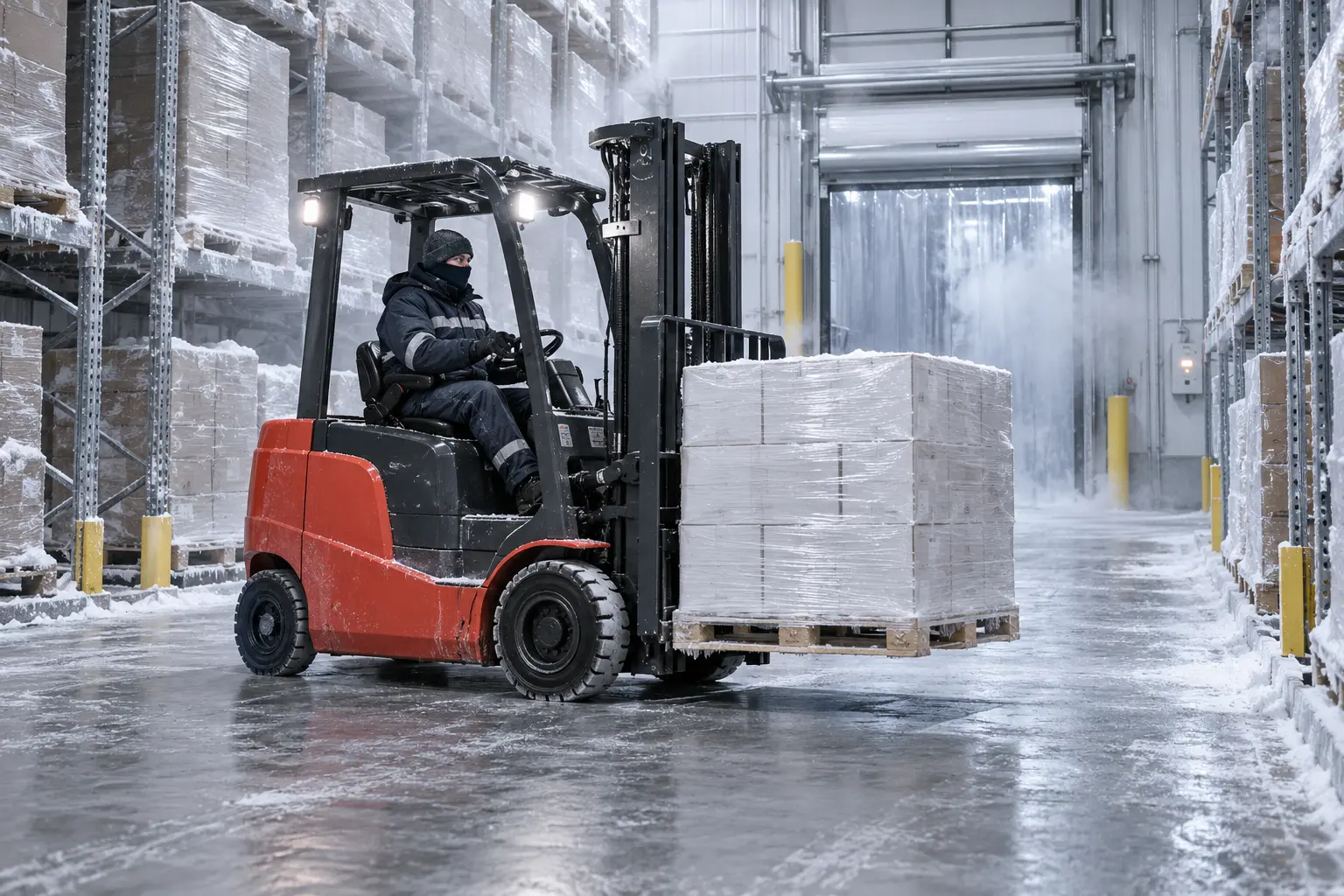
Illustrative ZJ application visual. It does not represent a verified customer site or final supplied configuration.
YOUR NEXT MOVE STARTS HERE
LET’S LIFT
YOUR AMBITION.
Tell us what you move. We’ll start with your requirements.
ZJ